An online learning experience for K-12 teachers
Hi! This program ran in July 2023. If you would be interested in hearing about similar learning experiences that I will run in the future, please fill out this short form.
You can explore some of the materials from the July 2023 program in this folder.
Quick facts:
Who: A group of K-12 teachers (maybe you!) and me, Justin Lanier.
What: A chance to learn about recent math breakthroughs and connect them to your classroom practice through some reading, some reflecting, and some Zoom gatherings.
When: During four weeks in July 2023. Four Zoom group sessions (to be scheduled) and about four hours of on-your-own work, whenever is good for you.
Why: To grow as mathematicians, both for our own enjoyment and for the benefit of our students.
How much: Free to participate! With a small suggested donation to some great causes.
Sign up: Registration is now closed.
Questions? Please reach out! justin.lanier@sydney.edu.au
And now with some more detail:
Hi! I’m really excited to bring this experience to life and to share it with you. It’s been bouncing around in my head for a while and I’m looking forward to making it happen!
Who: Participants will be current K-12 teachers (i.e. folks who teach elementary, middle, or high school) interested in stretching themselves mathematically and connecting the math that they teach with recent progress on interesting and important mathematical problems. Old friends and “we’ve never met” and everybody in between are welcome! Similarly, everyone from elementary school teachers who teach math in addition to other subjects to high school teachers who teach advanced math courses.
The program organizer is Justin Lanier. I’m a mathematician at the University of Chicago with an ongoing interest in building bridges between the K-12 and university math worlds. Before earning my PhD, I taught middle and high school math for ten years.
What: This is designed to be flexible and enriching online learning experience.
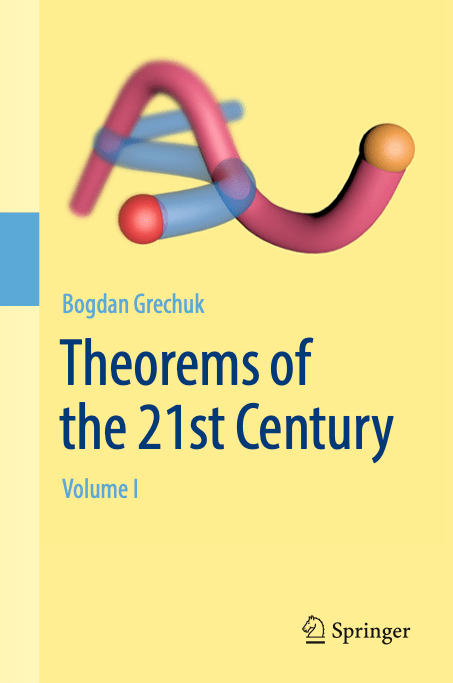
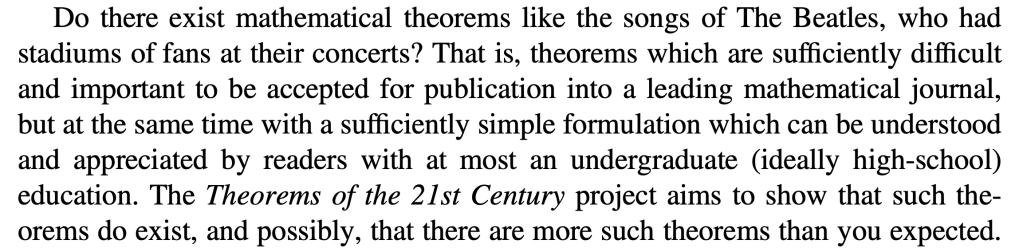
The main activity is digging into selections from Bogdan Grechuk’s book Theorems of the 21st Century. The first volume contains many short introductions to important math breakthroughs that were published from 2001 to 2010. Each introduction is 3-4 pages long and is written in an accessible way, showing how research results grow out of elementary, middle, and high school mathematics. Here is the book’s preface, table of contents, and two examples of intros. I will provide participants with a pdf copy of the book.
I’ll lead three Zoom sessions, each one centered on one of the book’s sections. I’ll talk about the section some, and then we’ll do some math in groups and share what we figure out.
Outside of the Zooms, you’ll dip into other sections of the book to find some math to chew on and reflect on. I will offer some prompts to help guide your engagement and reflection. Some of this work you’ll do on your own, and maybe you’ll also choose to connect with other participants as you work.
I’ll have some Zoom “office hours” where I’ll be available to chat math with participants.
And then at the fourth Zoom, participants will share about what they’ve learned about through their independent reading and work.
This is all designed to meet you where you are, to help you to find and pursue your own interests and goals, and to be flexible. If you have a schedule conflict and can’t make a Zoom meeting or two, you can still get a lot out of the experience!
When: There will be one Zoom group session each week of July: the weeks of July 3, 10, 17, and 24. (I’ll send out a poll to participants to figure out good time slots.) I’ll also schedule a few Zoom office hours sprinkled through this time. And you will plan to spend about four hours reading/working/reflecting on your own during the month, about an hour a week. Of course, you are welcome to dig in further, depending on your interest and schedule!
Why: There are many reasons you might decide to sign up. Here are a few:
– Grow as a mathematician, for your own enjoyment and for the benefit of your students
– Learn about connections between familiar math concepts and cutting-edge research
– Renew your energy and enthusiasm for math
– Revisit K-12 or college math you haven’t seen in a while, in a new interesting context
– Connect with other teachers who are also intrigued by engaging with math research
I have often found that by stretching myself mathematically, I can better help my students to stretch themselves mathematically. It opens me up, builds my confidence that I “can”, and reassures me that it’s okay to be confused, or to have partial knowledge, or to get stuck. There is also the excitement of having “aha” moments and understanding math that before seemed far out of reach. This is how I want my students to experience mathematics, and experiencing it that way myself helps me to pass it along. Also, learning about new math is exciting and a lot of fun!
How much: There is no fee to participate! I will encourage that participants consider making a $25 donation to one of several worthy initiatives that are helping to make the math research world a more equitable and supportive endeavor. Your donation will make an impact—and putting some skin in the game is always a good way to keep focus and commitment. (:
Here are a few!
African Institute for Mathematical Sciences (AIMS) – donate
Bridge to Enter Advanced Mathematics (BEAM) – donate
Enhancing Diversity in Graduate Education (EDGE) – donate
Julia Robinson Mathematics Festival (JRMF) – donate
Latinx and Hispanics in the Mathematical Sciences (Lathisms) – donate
Mathematically Gifted and Black (MGB) – donate
Sign up: Registration is now closed.
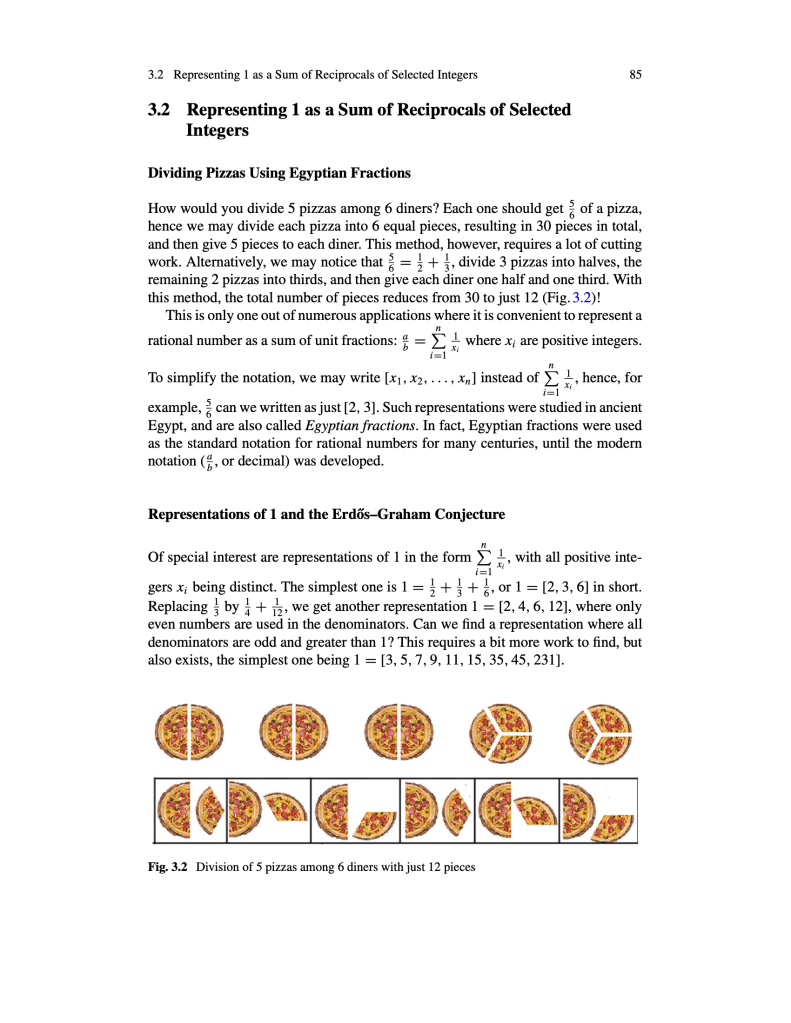
Sample page from Theorems of the 21st Century:
 Justin Lanier